



How a Full-Time Police Officer Booked $75K in 4 Months Without Ever Having Shot a Wedding
Jordan Harrell picked up a camera at crime scenes as an evidence tech. She was making $2K–$4K a month from family sessions when she joined. Four months later, she was booking weddings in the evenings after patrol shifts and getting ready to leave the department.
Interview by Peter Byram, Founder of The Icon Agency
Published Date: October 1, 2026

Interview by Peter Byram
Founder, The Icon Agency

Published:
October 1, 2026
Jordan's Background: From Crime Scene Photos to Weddings (00:00)
Peter: We're joined by Jordan Harrell of Free Birds Photography, a member of the Next Level photography training program. Jordan has an incredible story. Tell us a little about yourself and how you got started.
Jordan: I've been really artistic most of my life, but I never thought art could become a career. I joined the Army, and I'm still in the National Guard, one weekend a month. I fell in love with law enforcement, and my department sent me to evidence tech school. When we respond to major crime scenes, one of our jobs is photographing them. So I picked up a camera, put my artistic side together with it, took a bunch of classes, and fell in love with photography.
About three years ago, I started doing family sessions, newborns, and smaller portrait sessions. I never thought I could handle a full wedding, but I knew that's where the money was. My dream was always to go full-time. I love law enforcement, but photography has more of my heart.
The Real Problem: No Idea Where to Find Clients (03:51)
Peter: You joined Next Level in November 2021. What was business like then?
Jordan: I didn't even know where to start getting clients. I tried commenting on posts in Facebook groups, but nothing was biting. I had doubts about whether I could actually make this a career. I was making maybe $2K to $4K a month, mostly family and portrait sessions from friends and word of mouth. It wasn't weddings.
Peter: What made you think things could be different?
Jordan: I always knew I was meant to be an entrepreneur. I just needed coaching and guidance. I don't like people at work telling me, "This is your cap." Who are you to tell me how much I get to make? I'm in control of my own destiny. Next Level lit the fire I knew I had.
How She Found Next Level and Went All In (07:17)
Jordan: When I first started thinking about wedding photography, I reached out to the photographer I'd contacted for my own wedding and asked what she was doing to be successful. She told me Next Level was a great thing to be part of.
When I joined, I went all in. I paid attention to the modules and let them sink in. Like you said, listen to them a couple of times. I'd play them on my way to and from work, soaking up everything like a sponge.
Peter: For people listening, when Jordan says "going to work," she means driving a patrol car 40 hours a week.
Working Full-Time as a Cop and Booking Weddings at Night (11:08)
Jordan: I get up at 5 a.m., and I have to be loaded in the patrol car by 7. I take calls and write reports all day. If a call doesn't keep me late, I get home close to 6 p.m., and then I go straight to the office for consultations I set up the day before. I usually do calls until 8 or 9 p.m.
Peter: That's a grind. Why do you do it?
Jordan: Because I love it. When you deal with people in a negative atmosphere all day, coming home and talking to couples during such an exciting time in their lives is refreshing. They're excited to meet you. It's my balance. I love a challenge, and I want to keep going after it. I've been through military training and police training, so this is just another thing I wanted to chase down.
The Result: $75K in Four Months (15:37)
Jordan: I started Next Level on November 5th. My husband was very nervous about the decision, but I felt in my heart it was the right thing for us. In November, I made about $14,500, which tripled what I'd been bringing in. December and January were each around $16K. My goal was $20K, and in February, I brought in $100 shy of $30K. I told my husband, "Babe, I think it's time to throw in the towel at work."
Peter: That's about $75,000 in four months, with a full-time job. That's an amazing accomplishment.
How She Did It: Leads, Recorded Calls, and Connection (18:33)
Peter: How did you go from about $2,000 a month part-time to $15K to $20K a month?
Jordan: I reached out to a lot of people organically on social media and ran some Facebook ads, so leads came to me too. I'd do a discovery call over the phone, get them really excited, and let them get to know me as a person, because people need someone who genuinely cares and has empathy. Then I'd follow up with a Zoom consult and close.
Recording my calls was really important. You can see what you're doing right and wrong and tweak it.
Her Advice for Photographers on the Fence (20:54)
Peter: Say a photographer listening is making a few thousand dollars a month with no consistency. What would you tell them?
Jordan: Think about where you're putting your time and energy. Taking the next step with something like Next Level is an investment, and it's scary because you don't know if it'll work, and your partner might be more nervous than you. But ask yourself, "Why don't I deserve this?" Your business deserves it. How will you ever know unless you take the step? When I get comfortable, I start to get uncomfortable. That's how I live.
Why Coaching Matters (23:09)
Jordan: As an entrepreneur, you're on your own, with no one guiding you. You still have to put in the time and effort, but a coach gives you the tools and knowledge to make it work.
There were times in the last four months when I had a slower two weeks and started getting in my own head, wondering what I was doing wrong. I'm in my own bubble, so I can't always see it. A coach can look in from the outside and notice things like my tone of voice or demeanor on a call, which could be enough to lose a booking. Getting that feedback, and actually listening to it, is everything.
Peter: None of us are unbiased observers of ourselves. A couple of months ago, you told me the last few weeks had been slow and you didn't know if you'd be able to quit your job. This month, you did just shy of $30K.
Getting Ready to Leave Law Enforcement (26:33)
Jordan: I plan to go part-time in law enforcement next month. I had long conversations with my husband about it. I worked very hard to get where I am, so the leap was about more than money. Law enforcement felt like huge job security, because there will always be a need for cops.
But now I feel totally secure. You've gotten it down to a science. It's literally numbers. If you track and hone in on your numbers, you know you're good. We'll probably give it one more month to save some extra money, and then we'll make the leap. Four months ago, I thought maybe I'd look at it next year. Now I'd be financially better off doing this full-time.
Showing Couples Who You Are (31:49)
Peter: What's your number one piece of advice for people already in Next Level?
Jordan: Get out of your shell and put yourself out there. Follow up with people, and don't worry about being too much. Take in everything Next Level has to offer, record your calls, and review what you're doing. And let couples buy into who you are as a person. Show them your heart. They're not just buying your work. They're buying you.
On the phone, I tell them, "I could send you a bunch of packages, but I want to take the time to get to know you and your story, and I want you to feel that I'm a good fit for you." They respect that, and it sparks something that gets them onto the consult. Then on the consult, it's the same thing, amped up: "Tell me your story." People love to talk about themselves, and you both get a real feel for each other.
Mind you, I hadn't done a single wedding before Next Level. I was very transparent about that, but people really bought into me.
Peter: People make decisions based on logic and emotion. Does the package make sense? Do I like the work? But also: does this feel right? Do I trust Jordan? That's the X factor.
Handling Objections and Following Up (37:40)
Peter: A lot of people fold when they get an objection at the end of the call. That's where the sale really begins. How do you handle it?
Jordan: By the end of the call, they'll usually say I'm a good fit for them. So I come back with, "I feel like we're a good fit, and you've said we're a good fit. Why don't you deserve something like this for yourselves?" Sometimes they still don't book, so I always do a follow-up call. Couples are more likely to book on the follow-up, and that's happened a couple of times since we talked about it. You also have to know what to say when they say it's out of their budget, while still sounding genuine.
Peter: There's a big difference between helping people through a decision that's ultimately good for them and forcing them into something against their will. You have to stay in it when the real conversation starts.
Peter: What has transformed your life most about Next Level?
Jordan: Next Level breaks everything down into a science: what I need to do, how to do it, and the numbers. Now my workflow feels easy, and I have a system I can always refer back to. And the community is amazing. If I need anything, someone is always there.
$75K
in sales in her first four months
$30K
in sales in February alone, $100 short of her stretch goal
$2K-$4K
a month before joining, mostly family sessions
0
weddings shot before she joined
Jordan Harrell, owner of [Free Birds Photography], is a full-time police officer and a member of the Army National Guard. She discovered photography through her department's evidence tech training, where she photographed crime scenes. She started bringing the camera home, and soon she was doing family, newborn and portrait sessions for friends.
When she joined The Icon Agency in November 2021, she was earning $2,000 to $4,000 a month, almost entirely from friends and word of mouth. She had never photographed a wedding. In her first month, she brought in about $14,500 in sales. She followed that with about $16,000 in December and nearly $17,000 in January. In February, she brought in just under $30,000. That's about $75,000 in four months, all while working full time on patrol.
In this interview, Jordan explains how she balances patrol shifts with evening consultations, how she handles objections, and why couples book her even though she had no wedding portfolio.
Ready to turn your side business into your full-time job?
We run the ads and teach you the booking system Jordan used to bring in $75K in four months, working evenings after patrol shifts.
He joined The Icon Agency at the end of August 2024. Four months later, he had booked about 26 weddings across 2024, 2025 and 2026. He had also raised his prices to two or three times what he charged before, started booking couples in Chicago, and added video to his services. He did all of this despite payment problems that delayed his ads and a scam that drained his bank account.
In this interview, Haile explains how he books couples four hours away, what he does when his back is against the wall, and the three lessons he'd pass on to other photographers.
In this story
From crime scenes to couples
All in from day one
$75K in four months
How Jordan books couples
Why coaching matters
Jordan's advice for other photographers
Key Takeaways
Frequently Asked Questions
From crime scenes to couples
Jordan has always been artistic, but she never thought art could become a career. She joined the Army, then went into law enforcement. When her department sent her to evidence tech school, photographing crime scenes put a camera in her hands for the first time.

"I picked up a camera and put two and two together with my artistic ability. I fell in love with it." — Jordan Harrell, Free Birds Photography
She knew weddings were where the money was, but she didn't think she could handle a full wedding day. She tried commenting in Facebook groups to find clients, but nothing caught on. She wasn't sure photography could ever be more than a side job.
When she started looking for her own wedding photographer, she asked one of them how she'd built a successful business. That photographer recommended Peter.
All in from day one
Jordan's husband was nervous about the investment. She trusted her gut and went all in. She played the training videos on her drive to and from work and rewatched them until they stuck.
Her workdays are long:
She's up at 5 a.m. and in the patrol car by 7.
She takes calls and writes reports all day, sometimes staying late if a call runs over.
She gets home around 6 p.m., if she leaves on time.
She goes straight to her office for consultations she booked the day before.
Her calls with couples usually run until 8 or 9 p.m.
"When you're dealing with people all day in a negative atmosphere, and you come home and talk to people who are excited about this time in their lives, it's refreshing. It's my balance." — Jordan Harrell
Military training and police training taught her to push through hard things. To her, this was one more challenge to take on.
$75K in four months
Here's how Jordan's first four months went:
November: About $14,500, roughly three to four times her usual month
December: About $16,000
January: About $16,900, short of her $20,000 goal
February: Just under $30,000, about $100 short of $30,000
Total: About $75,000 in four months
She now plans to cut back to part time at the department, save for one more month, and then go full time in photography.
"I'm like, babe, I think it's time to throw in the towel at work." — Jordan Harrell
The hardest part of leaving wasn't the money. She'd worked for years to get where she is in law enforcement, and policing is a secure job. What reassured her was seeing her business run on numbers she could track.
"It's literally numbers. If you can dial into that, then you know you're good. There's a security there." — Jordan Harrell
How Jordan books couples
Jordan had no wedding portfolio when she started booking. She was upfront with couples about that, and she won them over by letting them get to know her. Here's her process:
Combine ads with outreach. Leads came in from her ads, and she also reached out to couples directly on social media.
Start with a phone call, not a pricing list. On discovery calls, she tells couples she could just send packages, but she'd rather get to know their story first.
Go deeper on Zoom. On the consultation, she asks couples to tell her about themselves and lets them talk.
Don't fold when couples push back. When couples bring up price or say they're talking to other photographers, she reminds them they've said she's a good fit and asks, "Why don't you deserve this?"
Always schedule a follow-up call. If a couple doesn't book on the call, she sets up a second one. Several couples have booked on that follow-up.
Record your calls. Listening back helps her see what's working and what isn't, from what she said to her tone of voice.
"They're not just buying your work. They're buying you as a person." — Jordan Harrell
Ready to turn your side business into your full-time job?
In November 2021, Jordan was a full-time police officer making $2,000 to $4,000 a month from family sessions, and she had never shot a wedding. Four months later, she had brought in about $75,000 and was getting ready to leave the department. If you want photography to replace your day job, let's look at where your business is now and whether the program is the right fit.
Why coaching matters
Jordan always believed she could build something big. She just didn't know where to start. Coaching gave her a clear process to follow, and someone outside her own head who could tell her what was working.
That mattered most during slow weeks. After two quiet weeks, she started to doubt herself and couldn't figure out why on her own.
"I'm in my own little bubble. I need somebody to come in and look at what I'm doing, even the tone of my voice on these calls. That could be enough to not book." — Jordan Harrell
A couple of months before this interview, she wasn't sure she'd ever be able to leave her job. Then she had a nearly $30,000 month.
Jordan's advice for other photographers
If you're on the fence: "Why don't you deserve this? Your business deserves this." It's a scary step, she says, but how will you ever know if you don't try?
If your partner is nervous: Jordan's husband was too. Trust your gut, and track your numbers so you can show the results.
Once you're in: "Get out of your shell." Follow up without worrying about being too much, use everything the program offers, and record your calls.
On every call: "Show them your heart." Couples book the person as much as the portfolio.
Key Takeaways
You don't need a wedding portfolio to start booking weddings. Be honest, and let couples get to know you.
A full-time job doesn't rule this out. Evening consultations can build a full business.
Recording your calls shows you what to change.
When a couple pushes back, stay in the conversation and schedule a follow-up.
Tracking your numbers gives you the confidence to go full time.
Frequently Asked Questions:
Can you book weddings without a wedding portfolio?
Yes. Jordan hadn't shot a single wedding when she joined. She was honest with couples and let them get to know her before talking about packages.
Can I grow a photography business while working full time?
Jordan works full-time patrol shifts and takes consultations from about 6 to 9 p.m. She booked about $75,000 in four months.
How do you handle price objections from wedding couples?
Jordan reminds couples that they've said she's a good fit and asks why they don't deserve it. If they don't book on the call, she schedules a follow-up.
Should photographers record their sales calls?
Jordan does. Listening back shows her what works and what doesn't, including her tone and demeanor.
When should I quit my day job for photography?
When your numbers show you can rely on the income. Jordan planned to cut back to part time, save for one more month, and then go full time.
How long does it take to see results?
Every business is different. Jordan brought in about $14,500 in her first month and about $75,000 over four months.
More Client Stories

Built a $150K Wedding Business With 40 Bookings
“I started from scratch in 2018. Now I’ve got 40 weddings booked, a team of 10, and we’re pulling in $150K+ a year consistently—even through the chaos.”

Julian McFadden
JM Weddings
"From full-time teacher to $500k/year in 1.5 years"
“I went from struggling to fill my calendar… to being fully booked for 2025, making over $500K in wedding revenue—with systems that keep growing.”
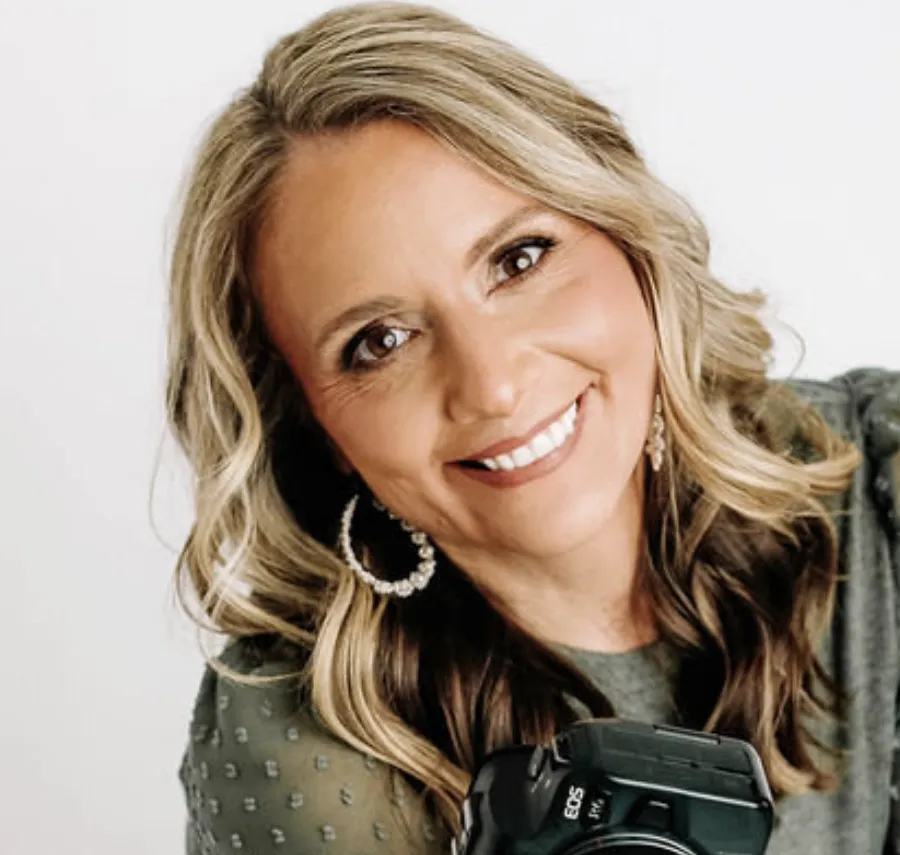
Sara Haines
Sara Haines Photography
"Booked 12 Weddings in 3 Months After Years of Nothing"
“I did workshops, mentorships—nothing delivered leads. Then I booked 12 weddings in just a few months. This was the first system that finally worked.”
Jordan Gresham
JKG Photography
Trusted by 400+ more successful wedding photographers


Step Into the Future of Bookings
Join hundreds of wedding photographers using Icon to attract premium couples and fill their calendars with high-paying clients—months in advance.

© 2026 The Icon Agency
Ready to scale your wedding photography business?
Book a call with our team or start with the free training to see how we can help you fill your calendar with high-paying clients.