



How Sebastian Poveda Books Wedding Clients Without Free Engagement Sessions, and Hit $20K in a Month
Sebastian's ads brought in plenty of leads, but he had to shoot and edit a free engagement session before most couples would book. That stretched his sales cycle to about three weeks and capped him at $5,000 to $10,000 a month. About a month after joining The Icon Agency, he had $20,000 in bookings.
Interview by Peter Byram, Founder of The Icon Agency
Published Date: October 14, 2026

Interview by Peter Byram
Founder, The Icon Agency

Published:
October 14, 2026
Meet Sebastian (00:00)
Peter: I'm back with another member of the Next Level photography and cinematography training program, Sebastian Poveda of Poveda Films. Tell us about you, your business and how long you've been shooting.
Sebastian: I'm Sebastian. I'm originally from Colombia, and I moved to the States with my family when I was about 13. I went to high school, graduated, didn't really want to go to college and started a wedding videography business. We just do videography now. We used to do photography too, and we still offer it, but we have other people do the photography for us. We've been in business for about four years.
Peter: How old are you?
Sebastian: 22.
From Catering to His Own Business (01:16)
Peter: Young entrepreneur. Did you go to college first?
Sebastian: No. In high school, I did catering for a woman I knew who had an events business. She's still doing it, and she's really big. I saw how much the photographers and videographers were making, and it was about 20 times what I made serving tables. So I learned how to shoot and started working with her. Then I found out how much she was charging clients compared with what she was paying me, and that's what kicked me into starting my own business.
A Three-Week Sales Cycle (02:12)
Peter: Before we connected, what was the real challenge you were trying to solve?
Sebastian: It wasn't that long ago, maybe a month or two. The big issue was that I had a client acquisition system. I was running ads and doing all this stuff, but it relied heavily on doing engagement sessions with prospects before booking them. That was how I built value to book clients. Then I got on a call with you, and you said, "There's a way to solve this so you can book clients without going out on engagement sessions." That got me thinking for about a week. How? I didn't sign up right away. Honestly, I looked into some of your students for a bit and started trying things, but I was overthinking everything. Then I joined, and you gave me a simple answer, which is all I needed. I was overcomplicating stuff.
Peter: Some people need an overhaul of their sales and marketing. Sometimes we look at the system you already have and say, "Make these changes." You had Facebook ads and a funnel, and you were getting clients, but the sales cycle was long.
Sebastian: It could be three weeks sometimes. Super long.
The Problem With Free Engagement Sessions (04:25)
Peter: What was the real headache with the free engagement session?
Sebastian: I've seen people post about this in the group. When you do a sales call and someone tells you no or ghosts you, it's demoralizing. It can put you in a slump, and you get paralyzed for a week. Now imagine that, but you also did an engagement session for this person. You edited their photos and their film, and you've been building a whole relationship with them. When somebody tells you no after all that work, that's when you truly get demoralized.
Peter: Even with just consults, you can easily get a bunch of nos in a row. But after all the effort of an engagement session? That's why we built a system that doesn't need it. There's nothing wrong with doing engagement sessions, and growing a Facebook group is a great strategy. But if that's the only way you can book, it's so time-consuming.
A Hybrid System (06:21)
Sebastian: Now I run a hybrid system. I use what I learned from you, but I also brought back some of the free engagement session contest. I tried the kind of ad the program recommends, and it brought in a lot of leads, but the free engagement session ad brought in about three times as many, because people like free. So I use that to generate leads, and then I use your methods to convert them: texting, consultations and quick chats. That was a game changer. Now I have three times the leads, and I know how to talk to them and get them into consults without an engagement session.
Peter: The traditional giveaway model is to run a contest, get a few hundred leads, pick a couple of winners and hope they book a wedding. Now you can get every one of those people onto a call and make them an offer.
Sebastian: And I've noticed that even the couples I did engagement sessions with would probably have booked anyway if I'd put an offer in front of them first. They were my ideal clients, and we clicked. The engagement session was just a little boost. So now I scan my leads to find my ideal clients as best I can and invite them to a consultation.
Texting Leads Within Two Minutes (08:42)
Peter: Do you have people going into a spreadsheet?
Sebastian: When I run ads, I'm hustling 24/7. The ad might bring in 100 to 200 leads. I text them within about two minutes of opting in: "Hey, thank you so much for entering the giveaway contest. I just wanted to let you know I received your entry." And I include a picture of myself. I'm not kidding, so many people have told me, "Thank you so much for letting me know you got it. I was scared this was an internet scam or another business trying to get my information." Most people fill out a form and don't think anything of it. But when I text them right away, that's when my pipeline starts. That's when they check out my website, follow me on Instagram and add me on Facebook. Some don't respond, and that tells me they might not be my ideal client, because I want someone who'll communicate with me and be open and fun. If they don't respond, I send them to the Facebook group and move on. I'd say about half respond to that first message with something like, "Thank you so much for letting me know." If they show interest, I say, "You're welcome. How's wedding planning going?" Then I jump into qualifying. I find out if they have a date and a venue. If they do, I keep going. If not, I invite them to the Facebook group and end the conversation.
His "Golden Two" Questions (11:31)
Sebastian: Then I ask what I call my golden two. These are two questions I ask to really scan them, to see whether they're just looking for something free because they don't have any money, or whether they value videography and photography and could jump on a consultation with me. You can word them however you want. I say, "Is it okay if I ask you a couple of questions I've been asking each entrant?" They say yes. The first question is, "What would it mean to you if you won one of the engagement sessions?" If they say something like, "We don't have any money for an engagement session, and it's been a tough year," that's a red flag. But sometimes people don't mention money at all. They say, "We've been in love for this many years, and this would be amazing. We love being in front of the camera." A super sweet answer. Then I ask the second question: "What exactly made you apply for this contest?" One of two things happens. Some people say they saw my video and fell in love with my work. That's the answer I'm looking for. Others say they need to cover some costs. If someone talks about my work, I know they enjoy it and actually looked at what I offer. With a lot of these contests, people enter and never look at your website, so when you announce winners, they're confused about who you are. Texting them and asking these questions makes them go look at my website. If they say they entered because they love my work, I ask my last question: "Would you be against jumping on a Zoom call so we can talk about your wedding day?" I just take my shot. If you've done your probing well and didn't ask too early, a lot of people say yes, because I do small talk with each person for about 20 minutes, going back and forth about their wedding and their venue. If they tell me their venue, I look it up on Google, take a screenshot of a spot I really like and say, "Wow, this looks amazing. I can just imagine the shots we could get here." It shows I'm paying attention and not just reading a script.
Peter: So you get 100 to 200 leads from an ad and text pretty much every one of them, every day.
Sebastian: Not everybody texts back right away. Some conversations take four or five days of back and forth, and some take 25 minutes, which is quick, because I can invite them to a consultation if they're qualified. Every day, you see where everyone is and ask your next question. In the Facebook group, I don't post much content. I post things like polls: "Do you have a wedding venue yet? Yes or no." If someone answers yes, I send them a private message: "Thanks for participating in the poll. How's wedding planning going?" and restart the conversation from there.
Peter: Out of 100 leads, how many respond to your first message?
Sebastian: Maybe 40.
Peter: That's a high response rate.
Sebastian: I think it's because I respond so quickly. They entered the giveaway two minutes ago. They're probably still on their phone.
Peter: And it's fresh in their heads. Then you qualify them in the conversation.
Sebastian: With those leads, I don't do quick chats, because I've already qualified them over text. Once they agree to a consultation, I send an email confirming the meeting, with the Zoom link and my website. I say, "Feel free to look at my work before the call. It'll make things more efficient for both of us." I also ask them to join from a computer, since I'll be sharing my screen. That usually does the trick. Very few people get on a Zoom call with me without having looked at my work.
Peter: It's all about positioning it as beneficial for them.
Sebastian: And on my website, I put my best work and not a bunch of links or text. It's all about my films. People tell me, "Wow, I watched all of your films on your website." That's what I want. The consultation is for everything else. My website is just for putting eyeballs on my work.
Peter: That's the beauty of this business. The work does a lot of the selling. If they look at your work and like it, they're pre-sold.
Likes, Dislikes and the Right Film (22:04)
Sebastian: On the Zoom call, I follow the script from the course, with some things I do a little differently. What I'm really listening for is what they like and what they don't like. Then, in the presentation, I show them the film that's closest to what they talked about. One bride told me about her sister's wedding. The photographer didn't watch the time and kept them outside for about two hours, and her sister was upset, because she was excited to see her family. In my mind, she's telling me the timeline matters to her and she'd rather spend time with family than be outside taking pictures. So I showed her a film from a couple who wanted exactly that. I said, very subtly, "This couple told me they just wanted to hang out with their family. They wanted some photos, but not to be outside for hours. So that's what we did," and I showed her all the shots we got in about 30 minutes.
Peter: That's the key: really listening, and then positioning exactly what they want.
Sebastian: I actually write it down. I draw a line down the middle of a sheet of paper and write "likes" and "dislikes." Every time they mention something they love or don't like, I write it down, so in my presentation I can hit every point and skip to the parts of the film that solve that problem or give them what they want.
One Custom Collection (25:17)
Peter: You're making a checklist of what they care about, so your offer is completely tailored to them.
Sebastian: That's why I don't do packages. I have one set price for having us at your wedding. It's much easier to get someone on a consultation when you tell them everything is customized. And if someone doesn't want a full ceremony edit, I don't add it, but I still get my rate.
Peter: We talk a lot about this in Next Level. You don't need complex packages. Couples look at them and think, "I don't need that," and it's hard to convert.
Sebastian: Once I'm done with my presentation, I say something funny, like, "Whew, let me drink some water. I've been talking a lot." They laugh. Then I say, "Now it's your turn. What questions do you have for me?" I want them to bring up the price. They'll ask how much I charge, and I say, "While you were talking, I was taking notes, and I built a collection I think is best for you based on what you told me. Would you like me to walk you through it?" They say yes. "Based on what you told me, you'll need eight to 10 hours of coverage. Does that sound right? You mentioned the getting-ready shots and the big exit." "Yes, that sounds perfect." I walk them through the same collection I do for everybody, but it feels original and tailored to them. And I connect each service to something they told me. When I get to the second shooter, I say, "You told me how excited you are to see your bride walk down the aisle. During the ceremony, I'll be focused on her, so she's in focus and looks amazing, and my second shooter will be focused on you, so we get your reaction."
Peter: Features and benefits.
Sebastian: Or drone footage. "You're getting married at this beautiful venue with an amazing lake. How cool would it be to get drone footage of it?"
Peter: Now they're thinking, "Sebastian is our guide. He gets us." They're not thinking about talking to someone else.
Sebastian: That's the key. Figure out exactly what they want and position your services as the bridge to it. A lot of creatives miss that. You do beautiful work, and that's important, but people don't care that you do beautiful work. They care about what they want. Sometimes we're so focused on our services and our expensive cameras that we forget about the client and their experience.
Peter: Being good is the bare minimum. You also have to be good at empathy, listening to couples and making it about them.
Sebastian: A wedding isn't just another party. It's one of the best days of someone's life, and a lot of brides have dreamed about it since they were little girls. It's a big deal. It's not about you. And when I connect with couples that much, if they're on the fence, I feel good about giving them an extra incentive or taking a couple hundred dollars off, because it's worth it to me.
Peter: You give yourself a little wiggle room, so it's a win-win.
Sebastian: I raised my prices by $1,000 to build that in. After I show them the collection, I ask, "Is there anything I missed that you want added?" Hardly anyone ever adds anything. They say, "No, that sounds perfect." Then I ask if they have any other questions, hinting so they'll ask the price. When they ask, I say, "If you go to my website, the everyday price for this collection is $6,500. But because I appreciate you coming on this call and taking an hour of your day, I have something called incentive-based pricing. If you decide within 48 hours, I can take $1,000 off, so it's $5,500." Then I stop talking and let them take it in.
Handling "It's a Lot of Money" (33:11)
Sebastian: I've done enough sales calls to know whether it's a hard no. $5,500 is a lot of money for some people. If they look at each other funny, I know they think it's too expensive. If they say, "We'll have to talk about it and get back to you," I've heard that enough to know they're trying to get off the hook. They're on the call with you, the expert. What else do they need to talk about? So I call it out. "Let's talk about the elephant in the room. I saw you make some funny faces. What's going on?" They say, "It's a lot of money." And I say, "Is this expensive? Yes, it's expensive. If you look at other videographers, you'll find someone who charges $1,000 or $500. I could even find you someone who charges very little." Then I pull up my website and have them read a paragraph where I describe myself as a wedding filmmaker. I ask, "Do you know the difference between a wedding filmmaker and a wedding videographer?" They don't. "A wedding videographer shows up to your wedding, doesn't know anything about you, turns on the camera and captures whatever they see. A wedding filmmaker takes the time to learn your story and crafts a film that tells it the best way possible. That's why we're here. We're wedding filmmakers, not wedding videographers." Then I make an analogy. "Why do you go to McDonald's?" "Because it's quick and cheap." "Exactly. It fills you up and gets the job done. But on your 20th anniversary, are you going to McDonald's?" "Obviously not." "You're going to a restaurant where you'll pay $50 for a steak, because you know what product and experience you'll get. We're not the cheapest, and we know it. The reason we charge more is that we don't take on 80 to 100 weddings a year. I've been in this industry for four years, and the people charging $1,500 can only sustain that by filming two weddings every weekend. If I'm doing that, I won't have time to edit your film the way you want it or craft your story, because I'll be on to the next wedding."
Peter: Anybody can do the probing and the presentation. The closing is what takes practice.
Sebastian: The last thing I do, I got from another client's interview. I have them close their eyes. "Picture your wedding day 20 years from now, sitting down with your kids, saying, 'Let's watch Mommy and Daddy's wedding film.' What do you want to feel in that moment?" One bride actually started crying. Then I say, "Okay, open your eyes. I can do that for you." Not everyone says yes, but meeting them where they are and saying, "I know it's a lot of money and you're scared, but I'll hold your hand through it," helps. I have my core values on the wall behind me, and one of them is "Do the right thing." I tell them, "Doing the right thing is not letting you go with a $500 videographer, because I know they won't take care of you the way we will."
Peter: You have conviction that it's the right thing for them.
Sebastian: That's where being good comes in. It can take mindset work, because it's hard to tell ourselves we're good. But if we know we'll work hard for our clients and give them a product they'll love, we have to believe it enough to tell them, "The way I'll work for you is better than anyone else."
Peter: We didn't even talk about the free engagement session. These people came in from an ad about one, but you just get them on the phone.
Sebastian: Once they're on the call, it's a new opportunity. Everything before it doesn't matter. If they're still on the fence, I'll bring up the contest: "By the way, we still haven't picked the winners. We're still getting hundreds of entries. But if you move forward with us today, I'll add an engagement session to your collection for free." It's just one more thing. Everything a couple tells you on a call is ammunition for when it's time to position yourself as the bridge to what they want: the engagement session, how close they are to their family, how much they care about seeing each other walk down the aisle. If you get someone emotional, you have to close them. It's not about the exact questions or your tone of voice. It's about connecting heart to heart, seeing what they want and giving them exactly that.
Even a simple question like, "When did you start dreaming about your wedding?" can lead to her saying her dad is her hero, and I'll say, "Then I'm guessing a first look with your dad would be pretty special to you."
$20K Booked in a Month (46:58)
Peter: You've been in Next Level for about a month. What results have you seen?
Sebastian: Before Next Level, I was at $5,000 to $10,000 a month at most. If I hustled like crazy, I'd get those $10,000 months. After Next Level, I didn't even put in a lot of work in the first couple of weeks, and I'm at about $20,000 in bookings, just from shifting my focus and my activities. For me, it was the mindset shift and not being so one-dimensional, not relying only on ads or only on organic, but seeing them as one system that works together.
Peter: So you doubled your revenue, and you weren't even really running ads this month.
Sebastian: I didn't run paid ads this month. I posted the same ad organically, and people started sharing it. That's how I got my leads. And not doing those engagement sessions freed up so much time. Before, I was talking to five couples trying to set up engagement sessions. Now you can talk to 50 couples in a day, because all you're trying to do is set up consultations. You can do more volume, and you can get a sense of who people are much faster.
Peter: If a wedding filmmaker is listening who thinks 20K in a month would be everything they've ever wanted, and they're on the fence about joining, what would you say?
Sebastian: Don't be as one-dimensional as I was. One of my limiting beliefs was that if my work was good enough, people would book me. "If only I had this camera." It's not about any of that. It's about building a business: knowing how to generate leads, warm them up and convert them. I've bought every course there is to help me book more weddings, and yours is by far the most in-depth. You explain every single thing, so after a module, there's no doubt about what to do. It's nice to have a set of instructions to follow before you write your own scripts. And you don't just give templates. You explain why we're doing what we're doing. So go for it. It's worth it. One more piece of advice for videographers: it's harder to book video alone, because couples usually book their photographer first. If you can sell photography too, it speeds up the booking process. We bring couples in through photography with an associate photographer, and that's how we sell our videography.
Peter: A lot of members are photographers who sell video through an associate. You've reversed it.
Sebastian: I met with a couple of associate photographers and asked, "If I send you a lot of clients, what's your price for a full day, including editing?" They give me a price that's lower than what they'd charge a client, and I add about $500 or $600 on top. My photographer takes care of everything else, and I really make my money on the films.
Peter: What's been the most transformative thing for you in Next Level?
Sebastian: The organic side. I used to think organic meant cold-calling people or reaching out to 500 people a day. You can do that, and if you have no clients, it's a good place to start. But I learned that organic can mean anything, like someone who's been in your Facebook group for a while that you then get on a consultation. I stopped seeing it as something you have to do 50 hours a day glued to your phone. Now I run some ads to generate volume and use your strategies to work those leads.
Peter: They're all just leads, whether they came from an ad, a Facebook post or a referral. It's the same sales process.
Sebastian: I tend to overcomplicate things, because I see everything as a system. But there's no perfect system. The real system is knowing how many leads you have, how many you can reach, how many consultations you can book and how to improve your conversion rate. That was a big shift from your course. You tell us what to do, but more importantly, you tell us why, and how to think about it. When you know why you're doing something, you can come up with your own scripts and your own way of speaking.
Peter: That's why it's built that way, so people can innovate around it. If you only have templates, you don't know what to do when things change.
His Advice: Hit Your Numbers (58:26)
Peter: Last question. What's your number one piece of advice for other members of Next Level?
Sebastian: Hit your numbers and reverse engineer. If your problem is that you're not getting bookings, ask yourself how many consultations you did this week. If you didn't do any, ask how many leads you brought in, organic or ads, to set them up. Trust the numbers, because it really is a numbers game. The more consults you do, the more weddings you book. And you only need about four weddings at $5,000 a month to hit $20,000. I feel blessed to be in an industry where we sell high-ticket products, not $200 widgets. And if you're doing the consultations and still not getting results, ask yourself: am I only thinking about money, or am I genuinely thinking about my clients and how to add value? People get rewarded based on how many people they help. So I ask myself, "How many brides am I helping today?" And giving value doesn't have to mean giving something. Sometimes it's just listening. Some brides book with us partly because we genuinely listened while they talked, even about things that weren't related to the wedding. How attentive you are and how fast you get back to people count as value too.
Peter: You can give a lot of value on a call.
Sebastian: One more tip: get good at sales. Once you're confident on sales calls and you're not reading the script, you can stop worrying about what to say and focus on what the person is telling you. My first sales call, my hand was shaking so much I had to put it out of view. It's nerve-wracking to ask a stranger for money, and it's nerve-wracking to shoot your first wedding. But you do it and get good at it. Eventually you stop thinking about Peter's script and start thinking about your own, what works for you and your business. That's where the magic happens.
Peter: It's not about the next shiny tactic. It's about going deep on the fundamentals: sales, copywriting and some technical skills. The people who crush it keep their blinders on. Thanks for hopping on, Sebastian. I can't wait to see where you go over the next six months.
Sebastian: Thanks, man. Take care.
$20K
in bookings in about a month
$5K-$10K
his best months before
40%
of leads reply when he texts within two minutes
$6.5K
his everyday collection price
Sebastian Poveda of Poveda Films started his wedding videography business at 18. He'd been working catering for an events company in high school and noticed how much more the photographers and videographers were making. He taught himself to shoot, and four years later he runs his own business, with associate photographers covering photo.
He already had Facebook ads and a funnel. The problem was how he booked: he ran free engagement session giveaways, and most couples needed to do an engagement session with him before they'd commit. The sales cycle could take three weeks, and in a great month he made $10,000.
Spending hours on sessions that don't book?
We teach you the sales process Sebastian used to book couples without a free engagement session and reach $20,000 in bookings in about a month.
About a month after joining The Icon Agency's program, then called Next Level, Sebastian kept his giveaway ads but stopped shooting free sessions before the sale. Instead, he texts every lead within minutes, qualifies them with a few questions and invites the right couples to a Zoom consultation. He had $20,000 in bookings that month.
In this story
The problem with free engagement sessions
How Sebastian books wedding clients without free engagement sessions
Likes, dislikes and the right film
One custom collection
$20K booked in about a month
Sebastian's advice for other filmmakers
Key Takeaways
Frequently Asked Questions
The problem with free engagement sessions
Sebastian's old system worked, but it was slow and exhausting.
"It's demoralizing when you do a sales call and someone tells you no or ghosts you. Now imagine that, but on top of it, you did an engagement session for this person. You edited their photos and their film. When somebody tells you no after you've done all that work, that's when you truly get demoralized." — Sebastian Poveda, Poveda Films
On his first call with Peter, Peter told him there was a way to book couples without the engagement session.
"That really got me thinking for about a week. How? This guy told me it's possible. Then I joined, and he gave me a simple answer, which is all I needed. I was just overcomplicating stuff." — Sebastian Poveda
How Sebastian books wedding clients without free engagement sessions
Sebastian still runs a free engagement session giveaway ad, because it brings in about three times as many leads as other ads. What changed is what he does with them.
Text within two minutes. As soon as someone enters, he texts them, thanks them for entering, lets them know he got their entry and includes a photo of himself. About 40 out of every 100 reply.
Ask how planning is going. Then he asks if they have a date and a venue. If they don't, he invites them to his Facebook group and ends the conversation there.
Ask his "golden two" questions. "What would it mean to you to win the engagement session?" and "What exactly made you apply?"
Listen for the right answer. If they say they entered because they saw his video and loved his work, they're a fit. If they mostly talk about needing to save money, that's a red flag.
Take his shot. "Would you be against jumping on a Zoom call so we can talk about your wedding day?"
"If you've done your probing well, a lot of people say yes, because I literally do small talk with each person for about 20 minutes." — Sebastian Poveda
When a couple shares their venue, he looks it up, screenshots a spot he loves and sends it with, "I can just imagine the shots we could get here."
Likes, dislikes and the right film
Before the Zoom call, Sebastian emails the link along with his website, which is almost all films and very little text. He asks couples to look at his work beforehand and to join from a computer, since he'll share his screen.
On the call, he draws a line down a sheet of paper and writes "likes" on one side and "dislikes" on the other. Then he listens.
One bride told him the photographer at her sister's wedding kept the couple outside for two hours, away from the family. So Sebastian showed her a film from a couple who wanted the same thing she did: time with family and great shots in about 30 minutes.
"When it comes to my presentation, I'm able to hit every single one of those points, and skip to the parts of the film that solve that problem or give them what they want." — Sebastian Poveda
One custom collection
Sebastian doesn't offer packages. He has one everyday price, and he tailors the collection to each couple.
"It's way easier to get someone on a consultation when you tell them everything is customized." — Sebastian Poveda
He ties every service to something the couple told him. If the groom said he can't wait to see his bride walk down the aisle, Sebastian explains that he'll be focused on her while his second shooter captures the groom's reaction. If they mention a beautiful lake at the venue, he suggests drone footage.
His everyday price is $6,500. Couples who decide within 48 hours get $1,000 off, for $5,500. If they're still on the fence, he includes an engagement session when they book.
When a couple hesitates on price, he names it: "Let's talk about the elephant in the room." Then he explains the difference between a videographer, who shows up and records, and a wedding filmmaker, who learns their story and crafts a film around it. He compares a quick fast-food meal to a steak dinner on a 20th anniversary.
"While we're not the cheapest, the reason we charge more is that we don't take on 80 to 100 weddings a year. If I'm filming two weddings every weekend, I won't have time to craft your story." — Sebastian Poveda
Ready to book couples without giving away your time?
Sebastian was shooting and editing free engagement sessions before most couples would book, and his best months topped out around $10,000. About a month after changing his sales process, he had $20,000 in bookings. Let's look at where your business is now and whether the program is the right fit.
$20K booked in about a month
Before joining, Sebastian's best months were $5,000 to $10,000. About a month in, he had $20,000 in bookings, and he didn't even run new paid ads that month. He posted the same giveaway ad organically, and people shared it.
"Before, I was talking to five couples trying to set up engagement sessions. Now you can talk to 50 couples in a day, because you're not doing the engagement session with anybody. All you're trying to do is get consultations set up." — Sebastian Poveda
He also learned that videography is easier to sell alongside photography, since couples usually book a photographer first. So he works with associate photographers, adds about $500 to $600 on top of their rate, and books photo and video together.
His biggest shift was seeing all leads the same way, whether they came from ads, his Facebook group or referrals.
"Peter tells you what to do, but more importantly, he tells you why you're doing it. When you know why, you can come up with your own scripts and your own way of speaking." — Sebastian Poveda
Sebastian's advice for other filmmakers
Hit your numbers: "If your problem is you're not getting bookings, reverse engineer it. How many consultations did I do this week? How many leads did I bring in to set up consultations?"
Remember the math: "You really only need about four weddings at $5,000 a month to hit $20,000."
Add value: "How many brides am I helping today? Sometimes giving value is just listening to them."
Get good at sales: "My first sales call, my hand was shaking. You just do it, and you get good at it. Eventually you stop thinking about Peter's script and start thinking about what works for you."
Key Takeaways
Shooting free sessions before every sale makes the sales cycle long and draining.
Texting leads within minutes gets far more replies.
A couple of good questions can show who values your work.
Writing down likes and dislikes lets you tailor every presentation.
One custom collection is easier to sell than a menu of packages.
All leads are just leads, wherever they come from.
Frequently Asked Questions:
How do I book wedding clients without doing a free engagement session first?
Sebastian still runs a giveaway ad, but he texts every lead within minutes, qualifies them with a few questions and invites the right couples to a Zoom consultation instead of shooting the session first.
How fast should I respond to wedding leads?
Sebastian texts within about two minutes of someone opting in. About 40% of leads reply, often because the entry is still fresh in their mind.
What questions should I ask to qualify a wedding lead?
After asking about their date and venue, Sebastian asks, "What would it mean to you to win?" and "What exactly made you apply?" He's listening for couples who mention his work.
Should I offer wedding packages or one collection?
Sebastian offers one custom collection with an everyday price, and he tailors it to what each couple tells him.
How do I handle "That's a lot of money" on a consultation?
Sebastian names it directly, explains the difference between a videographer and a wedding filmmaker, and reminds couples he doesn't take on 80 to 100 weddings a year.
How can a videographer book more weddings?
Sebastian sells photography through associate photographers, since couples usually book photo first, and books video alongside it.
More Client Stories

Built a $150K Wedding Business With 40 Bookings
“I started from scratch in 2018. Now I’ve got 40 weddings booked, a team of 10, and we’re pulling in $150K+ a year consistently—even through the chaos.”
Julian McFadden
JM Weddings
"From full-time teacher to $500k/year in 1.5 years"
“I went from struggling to fill my calendar… to being fully booked for 2025, making over $500K in wedding revenue—with systems that keep growing.”
Sara Haines
Sara Haines Photography
"Booked 12 Weddings in 3 Months After Years of Nothing"
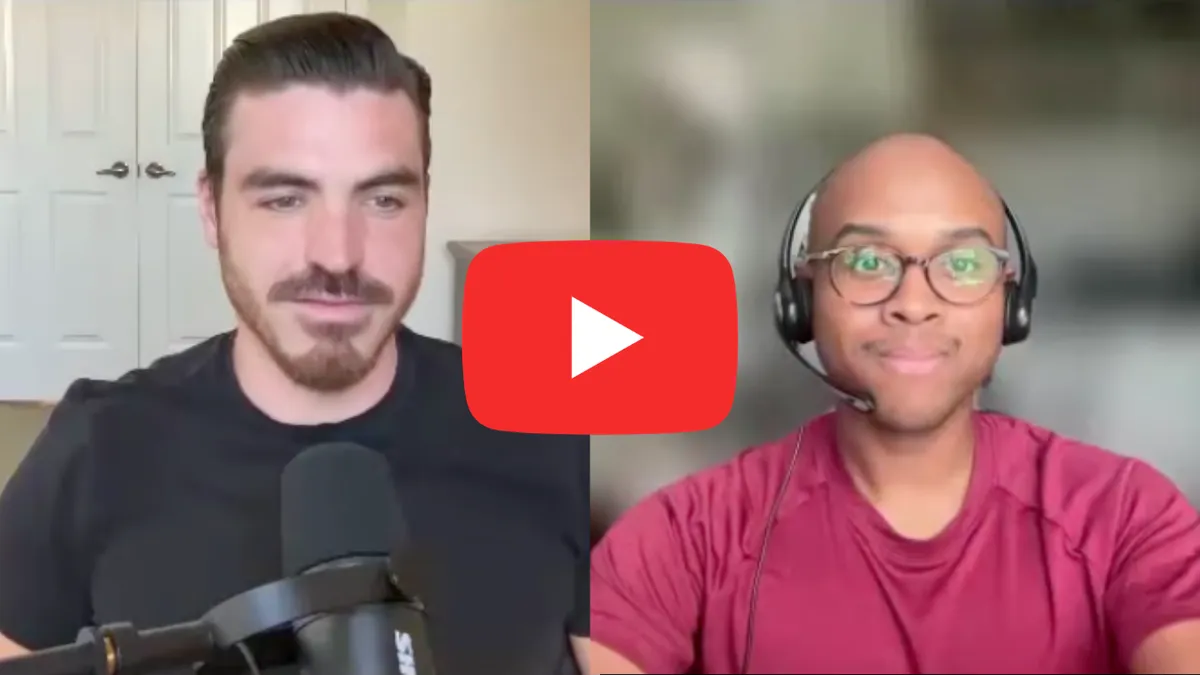
“I did workshops, mentorships—nothing delivered leads. Then I booked 12 weddings in just a few months. This was the first system that finally worked.”
Jordan Gresham
JKG Photography
Trusted by 400+ more successful wedding photographers


Step Into the Future of Bookings
Join hundreds of wedding photographers using Icon to attract premium couples and fill their calendars with high-paying clients—months in advance.

© 2026 The Icon Agency
Ready to scale your wedding photography business?
Book a call with our team or start with the free training to see how we can help you fill your calendar with high-paying clients.