



How Dustin Kennon Got Consistent Wedding Inquiries and Booked $37K in Five Weeks
Top Shelf Media did about $50,000 in all of 2019. Some weeks brought eight inquiries, then two weeks would bring almost nothing. After Dustin started running ads and gave every couple a consult instead of a pricing guide, he booked $37,000 in five weeks, in the middle of a pandemic.
Interview by Peter Byram, Founder of The Icon Agency
Published Date: October 12, 2026

Interview by Peter Byram
Founder, The Icon Agency

Published:
October 12, 2026
Meet Dustin and Top Shelf Media (00:00)
Peter: We're with another member of the Next Level photography training program, Dustin Kennon of Top Shelf Media. Dustin, you have an incredible success story. Introduce yourself and tell us about your background and Top Shelf.
Dustin: I've been doing photo and film for about five years, and Top Shelf has been around for about three of those. I knew early on I wanted a team. I didn't want it to be just me. There's nothing wrong with that, but I wanted other people to collaborate with. I think people are stronger together than on their own. I have a background in restaurant work, and that's where the name Top Shelf came from. In a bar, the top shelf is where you put the bottles you want to show off, the ones with real value. Top Shelf started in January 2018. From the start, it's mostly been me, but I've always talked about it as a company. One of the most fun things has been watching it grow. Now I actually have a team. They're not full-time yet, but there are people at Top Shelf, and we do projects together. Seeing it go from a concept, "We want quality, we want you to value your photos and film and show them off," to an actual company with people has been one of the biggest rewards.
Why He Wanted a Team (02:57)
Peter: What is it about having a team that inspires you?
Dustin: Different people have different strengths, not just in photo and film but in general. I'm business-minded in that I can come up with ideas, but I'm not a numbers person. I know that's not my strength. So instead of working twice as hard to be half as good, I'd rather find someone who's good at it and let them work in their strengths, while I work in mine. Then we win together. And in photo and film, some of my best shots and best wedding days haven't been because of me. They've been because I was working with a photographer who said, "Hey, let's try this," and they were right. It wasn't, "I'll do my job, you do yours." I've seen how strong a team is when everyone has a common goal and works in their strengths. Their strengths cover other people's weaknesses. I knew early on I wanted people who are good at things I'm not good at.
Feast-or-Famine Inquiries (05:41)
Peter: Before we started working together, what was the big challenge you were trying to solve?
Dustin: It was twofold. The first was a consistent stream of inquiries, especially for weddings. One week we'd get six, seven or eight people reaching out through our website, WeddingWire or by phone, and we'd think we were killing it. Then for two weeks we'd get one person, and you could tell they weren't for real. They were just price shopping. There was no consistency, and that's really hard to build a company on. If I want this to be consistent and sustainable and pay people's bills, I can't have that huge up and down with no middle ground. It was a shot in the dark, honestly.
From Pricing Guides to Consults (07:07)
Dustin: The second thing I never saw as a problem until things improved once we started working together: how we talked to couples. Like everybody else, when someone reached out, we'd say,
"Yes, we'd love to work with you. Here's our pricing guide. Let us know if you have any questions," and attach a PDF. About a year before you and I talked, we moved away from the PDF, because it's hard to show video in a PDF. We made a web page with an intro video of me saying, "Super glad you're here, we'd love to work with you," plus films to watch and photos to see. It was more interactive and better than the PDF, because couples got to see our heart before they saw prices.
For us, it's not just another wedding. It's their story and their day, and they should get great photos and a great film. But I was still thinking it wasn't quite there yet. One of the best things about the training was shifting to consults. That's us talking to couples, getting to know them and hearing their story and what they want for their day, which is what we're all about. It's fun on a personal level, and from a business standpoint, it's great to make that connection. So we went from, "Here are our prices, let us know if you want to book," to, "Let's talk like human beings first, and we'll get to that later." Now we only do consults. We don't send our information without a consult. People might think, "You'd turn someone down out of the gate?" It's not that we don't want to do their photos or film. We want to make that connection first, because hearing their story is that valuable to us, versus just showing up with a camera and documenting their day.
Leads Every Day, Even in a Pandemic (11:12)
Peter: So you had a vision of building and scaling this company, and two challenges to solve. The first was consistent inquiries. How did you solve that?
Dustin: The big part was the ads, working through that part of the training. Once we started the ads and the training, we had consistency. Now it's pretty much every day we have people to talk to. We have a list: let's call them, let's hear their story, let's see if we're a good fit. Before, we might have eight people one week and nothing for two weeks. And in the middle of a global pandemic, that's even more of a shot in the dark. I'm not saying the pandemic is good by any means, but one thing I've seen come out of it is that it's sifted the industry. It's shown who's in this because they're passionate about it, whether they're photographers, florists or caterers, and who's in it because they realized you can put "wedding" in front of something and charge more. The craziest part is that the pandemic is still here, and we still have a list of people to talk to. It's a little nerve-wracking. If this is what it's like in the middle of a pandemic, I'm not sure how we'll handle it when things settle down.
Building a Team, Not a Bank Account (14:34)
Dustin: That's scary but exciting, because for me it's never been about more money or more stuff. I'm not a car person. I see the growth as letting the team build, bringing on more people and investing in better equipment so we can make even better photos and films. One of the people who works with me graduates from college in May, and one of my goals is to give him a full-time job when he graduates. He works hard, he's a really good guy, and he treats our couples really well. So for me, growth isn't money in the bank. It's people on the team.
Peter: That's what drives you: changing the lives of your clients and your team, like giving someone just out of college a full-time job.
Dustin: I worked in restaurants and other jobs for more than 10 years before Top Shelf. I've worked for some really great people and some not-so-great people. Some of those bosses were incredible. If I lived back in that city and wasn't doing Top Shelf, I'd absolutely work for them again. That's how I want to be as a boss. Fifteen years later, I'm still talking about how great they were. I want to have that kind of impact on others.
Peter: So the first challenge was consistent inquiries, which you solved with Facebook and Instagram ads and funnels that bring people into your sales process. The second was ghosting and price shoppers. You were sending people to a web page. What are you doing differently now, and how's it going?
Dustin: The biggest shift is consults. Before, we'd send a link to our wedding guide and say, "Let me know if you have any questions." I'd write each couple's name on a whiteboard with how they reached out, so I could follow up in 48 hours, not about budget, just, "Hope you got a chance to look at the guide." Same on WeddingWire. I was trying to get them on the phone. I'd never done video consults before the training. One thing that's always frustrated me about the wedding industry is the lack of genuine care. Some people treat it as just another day and a paycheck. Even before the training, once I got couples on the phone and heard their story, nine times out of ten they booked. It's not that I'm a great salesman. Once they connected with us and saw that we actually care about their day and want to celebrate with them, they could tell us apart from the 50 other photographers on WeddingWire or any other site, where everyone looks the same and you can't see anyone's heart. Once they could see that, they could see we're different. Not different for the sake of it, but because I believe it's a better way of operating.
What Happens on His Consults (22:01)
Peter: Now everyone who seems like a fit gets a consultation instead of a pricing guide. What do you do on those consults?
Dustin: There are three parts, and at the start we don't even talk shop. Our tagline is "Your story, our quality," so step one is hearing their story. How did they meet? What are they like as a couple? We want their photos and film to be theirs. I tell couples, "You should never be able to take you guys out of your photos or your film and have it still make sense." It can still be pretty, but it won't be you. We want photos people want to hang in their house and show off, and films with great craftsmanship, but also stunning and authentic. If they're a goofy, fun-loving couple, that should come across. If they're more reserved and quiet, that's what their photos and film should reflect. So first, their story: where they're from, how they met, their first date, how they got engaged. It's just cool to hear, and it helps us understand what's important to them. At the end of the day, we want to provide what they care about. If we can't, we'd rather send them to someone who can. It's probably not the best business mindset to say, "We're not going to do your photos and film, we'd rather refer you," but I'd rather send them to someone I know can do what they want than try to bend Top Shelf into something we're not. Early on, when someone would pay you, you'd say yes to anything. Looking back, some of those were great people, but what they wanted isn't what Top Shelf does, and that's totally fine.
Peter: When you go into a consult thinking, "I don't need to sell this person, I'm trying to do what's best for them," you end up booking more, because people pick up on it.
Dustin: That was one of my favorite things from the training. I'm not a big salesperson. I'm not going to say whatever I need to say or keep talking until you say yes. That's not who I am, and it doesn't feel good. I've been on the other side of that, where I just want to hang up because the person isn't taking the hint. So I loved the shift that when you walk into a consult, your goal isn't to sell the photos or the film. My goal is to see where you want to be and what you want, and then see if I can get you there. Being customer-oriented was already really big at Top Shelf, so having that mindset was incredible.
Selling Without Feeling Salesy (27:28)
Peter: A lot of photographers and filmmakers are good-hearted creative people who want to help, but when we talk about sales, they say, "I don't want to be salesy or pushy." How do you do it without feeling salesy?
Dustin: It's the mindset. On my first few consults, right before I opened the video call, I'd tell myself, "Take a second. These are people. They have a story." If you walk in thinking, "I'll say whatever I need to say until they book," it might work sometimes, but it won't be nearly as successful, and the relationship won't be as good, because your first real interaction with that couple is all about you wanting to make money. We've always wanted to provide good photos and good film, but at some weddings I've wanted that even more, because the couple is just awesome. Halfway through the day, I'm wondering whether to keep shooting or just be a guest. Making that connection up front obviously helps from a sales standpoint, because they're much more likely to work with you than with someone who won't take the time to talk to them. But the foundation of that relationship is that you're showing them care. Your mindset isn't, "I want to sell you something." It's, "I want to help you, and what I do is something you need." I'm not under the impression that we're the only good photographers. There are incredible people out there. But I know that if they go with us, we'll have a genuine interest in their day, and they'll get great photos, a great film and a better experience. People should enjoy their wedding day, and they should enjoy their photos and film afterward too. When you shift that mindset, it shifts so many things. And longer term, whether you're doing their engagement photos or their wedding, the whole relationship is built on you caring about them, which goes so much farther than just the sale.
Peter: When you go in to serve, and it's okay if it's not a fit, you're no longer a pushy salesman. You're like a friend saying, "Let's see if this is a win-win."
Why He Chose The Icon Agency (33:46)
Peter: How did you first come across me?
Dustin: The short answer is Facebook. I saw some of your ads. What's funny is that a couple of months earlier, in May, I'd had a consultation with someone else who, from 30,000 feet, offers the same general kind of program. At the time, I said, "I'll let you know." What was different with you was, first, you were willing to work with me on the financial side with a payment plan. Otherwise, it wouldn't have happened logistically. But the other part was that I felt a genuine interest in my company. Top Shelf is one of the biggest and hardest things I've ever done, and it's really important to me. I'm pretty sure one of the first things you asked was, "Where do you want Top Shelf to be in a couple of years? What do you want it to look like?" I loved that, because it wasn't just, "Join my program." It was almost the same thing as a consult: "Let's make sure this is a good fit, and that what you want, we can actually do." And going back to what I said at the beginning, I'm not a salesman. I take really nice photos and make good films. Sales, funnels and process aren't what I do well, and I know that. So it made a lot of sense to invest in it. Let you bring what you do well to the table, and then we all win.
What He Hands Off, and What He Doesn't (37:29)
Peter: That's the same mindset: leverage other people. A lot of people can't grow because they can't let go of control. You don't have to be the wizard at everything.
Dustin: Take editing. If I hand someone the footage and the edit is awful, all cut up and the color totally off, I can just start again. Very few things can't be redone or fixed. What I'm much more protective of is who shoots the wedding day. It makes me cringe when I see people on Facebook saying, "I need a primary shooter for a wedding," and getting someone random to represent their brand. That will never happen with us. I'd rather do fewer weddings and do them well than try to do five weddings in a day with some of them shot by people I don't know can deliver the quality, and more importantly, the experience for the couple. But for the 40,000-foot side of sales, like running ads and doing social media, someone else can do it. If it's not perfect, I look it over and say, "Let's swap that." I don't have to do it all. And it's a learning opportunity for my team. I didn't have someone like that when I started Top Shelf. It was, "I think this is how I'm supposed to do this, but I guess we'll find out." I love having the chance to teach and let people grow their skills, because when they grow, it helps Top Shelf. That's one more person I can send to a wedding knowing they're confident and will give couples the same experience. I'm a human being, and I can only do so much.
Peter: Time and energy are finite, and when you invest in other people, you're investing in Top Shelf at the same time.
$37K in Five Weeks (41:54)
Peter: Let's talk results. We started working together a little over a month ago. What have you seen so far?
Dustin: It hasn't been just one thing. The Facebook ads have been great, but the mindset shift to doing consults instead of sending a guide shifted everything. I was closing out the month and adding up our bookings out of curiosity, and in my head I thought, "We did this wedding and that wedding, probably about $10,000." Then I added it all up, and it was, what? We booked $37,000 worth of work in five weeks, for weddings over the next few years. And to be fair, one of those weeks was mostly doing the training. In 2019, Top Shelf did about $50,000 for the whole calendar year. To book almost as much in about a month as we did in a year is nuts. And again, for me it's not about the money. It's that if this keeps going, even at, say, $20,000 a month, that's $240,000 a year. That's a team. That's hiring my team members full-time. And if I bring them on, that number only goes up, because I spend less time on things I'm not great at, and I'm not the only one editing, which increases our output.
I appreciated that the training didn't start with Facebook ads or copy. Step one was mindset, getting you right as a person and working through your schedule. That told me this isn't just about making as much money as we can. Then we built the funnel and the sales process. We had the film and the quality of what we produce locked down. The question was how to get in front of couples and show them we're what they're looking for.
I'll be honest, I was a little nervous when I first jumped in. But within a couple of weeks, the training had already started to pay for itself. And it's not just the training. It's the weekly Q&A calls and being able to ask you questions. There's a real interest in my company and everyone in the program, not just short term. In the Facebook group, I've posted a question and gotten four or five answers I wouldn't have thought of, or that would have taken me six more months to figure out. People are stronger together. And you added a whole new week of training recently at no extra cost, which I know took time to put together. That's the same mindset I have with Top Shelf. I don't want it to be one and done. I want couples to look at their photos and feel like they're there, and to watch their film and relive their wedding day. Those films become more valuable over time, because of the people in them and the moments they hold.
Peter: You went from about $50K a year, roughly $4K a month, to $37K in about five weeks, with one of those weeks spent on the training. That's what scaling is. That's exactly what we talked about doing: you wanted to invest in people and build a team, and to do that you needed to solve lead generation and optimize your sales process.
Dustin: I had to double-check the math. It reminded me of a moment in May 2018 when I was filming a friend's wedding. When I put their film together, it was different from anything I'd done before, much more story-based, and very much them. I remember watching the final edit and thinking, "This is it. This is Top Shelf. This is what I want the company to create." Seeing $37,000 booked in a month felt the same way. The car was running in neutral before. This was when the key got turned. It's both awesome and scary. You weren't selling a get-rich-quick scheme. At the very start of the training, you said, "This is going to be a lot of work, but it's worth it." I've never worked harder or longer on anything than Top Shelf. For almost three years, I've put everything into it, financially and with my time. To see the potential for it to become what I've always wanted it to be is incredible, and honestly emotional.
Peter: It's not that it could happen. It is happening. There will always be new challenges, but you can do it. And money is a reflection of the value you provide. People vote with their dollars.
Take the Leap, and Know Your Why (1:02:02)
Peter: If a photographer or cinematographer is listening and on the fence about joining Next Level, what would you say to them?
Dustin: Other than do the program? Every major jump I've made with Top Shelf has been just that, a jump: take a running leap, hold your hands out and hope there's something to grab. Every time, there's been something to grab on to, and I know Top Shelf wouldn't be where it is if I hadn't made those jumps. The training was one of them. Yes, it's scary because it's money. But there's another voice people don't talk about, the one that says, "At least I know where I'm at. I know the terrain." What if it actually works? I had that with the training and with going full-time with Top Shelf. What if I can actually do this full-time? That's what I want. A lot of people get scared away from their dreams because where they are is familiar, even if it's not what they want.
Peter: There's a part of us that dreams and a part that wants to stay where we are, even if the other thing is better. There's a time to plant and a time to harvest, and when you're in a harvest season, just say thank you. Last question: what's your number one piece of advice for other members of Next Level?
Dustin: Two parts. First, don't forget where you came from. Celebrate your success, absolutely. But remember there was a time when this wasn't a thing, not to dwell there, but to see how much you've grown and be grateful. Second, don't forget why you do what you do. If you don't know your why, figure it out. That was part of the training too: who are you as a company and as a person, and why are you doing this? If you don't know that, none of the rest is going to work as well. Why do you take photos? Why do you make films? Why do you plan events? In the almost three years Top Shelf has been around, that why has been everything to me. When I was taking those jumps, it was my motivation. "I don't know if this is going to work, and it's scary, but I know this is what I want and what I'm passionate about, so it's worth the jump."
Peter: When you know your why and remember it every day, doing the consults and running the ads gets easier. Where's the best place for people to find you?
Dustin: Search for Top Shelf Media Company on Facebook or Instagram. And if you're planning a wedding, we have a free Facebook group called Wedding 101. The tagline is "It's a wedding, not rocket science." We share content and answer questions, because planning a wedding can feel like drinking from a fire hydrant.
Peter: It's been a blast seeing your success in such a short time. It's a testament to you as an entrepreneur and your passion for what you do. I look forward to watching you build this team.
$37K
booked in five weeks
$50K
booked in all of 2019
Every day
new couples to call, instead of feast or famine
Every couple
gets a consult before they see prices
Dustin Kennon started Top Shelf Media, a wedding photo and film company, in January 2018. The name comes from his years working in restaurants. In a bar, the top shelf is where the best bottles go, the ones meant to be shown off.
From the start, Dustin wanted a team, not a one-person business. But inconsistent wedding inquiries made that hard. Some weeks, six to eight couples reached out through his website, WeddingWire or by phone. Then for two weeks he might hear from one person, usually someone price shopping.
Tired of feast-or-famine inquiries?
We run the ads and teach you the consult process Dustin used to book $37,000 in five weeks.
He joined The Icon Agency's program, then called Next Level, in 2020. With ads running, he now has couples to talk to almost every day. He also stopped sending pricing information without a consult. In his first five weeks, one of them spent mostly on the training, Top Shelf Media booked $37,000 in work. In all of 2019, it booked about $50,000.
In this story
Feast-or-famine wedding inquiries
From pricing guides to consults
What happens on Dustin's consults
Leads every day, even in a pandemic
$37K in five weeks, and a team to build
Dustin's advice for other photographers
Key Takeaways
Frequently Asked Questions
Feast-or-famine wedding inquiries
Dustin couldn't build a team on inquiries that came and went.

"There'd be one week where we'd get six or seven people reaching out, and we're killing it. And then we'd have two weeks where we'd get one person, and you kind of knew they weren't for real. They were just price shopping." — Dustin Kennon, Top Shelf Media
That made it hard to plan anything.
"If I want to build this thing and have it be consistent and sustainable, and pay people's bills with this, it's really hard to have this huge up and down. There's no middle ground." — Dustin Kennon
From pricing guides to consults
Like most studios, Top Shelf Media used to answer inquiries with a pricing guide. About a year before joining, Dustin replaced the PDF with a web page that had an intro video of him, sample films and photos. It was better, but he felt something was still missing.
"Somebody reaches out, and we say, 'We'd love to work with you. Here's our pricing guide. Let us know if you have any questions.' I never saw it as a problem before the training. Now we only do consults. We don't send our information without a consult." — Dustin Kennon
Even before the program, Dustin noticed that once he got couples on the phone, most of them booked.
"Nine times out of ten, once I was able to get them on the phone and talk to them, they booked. It's not that I'm a great salesman. It's that they could see we actually care about their day." — Dustin Kennon
What happens on Dustin's consults
Top Shelf Media's tagline is "Your story, our quality," and the consult starts there.
Hear their story first. They don't talk shop at the start. Dustin asks where the couple is from, how they met, their first date and how they got engaged.
Find out what matters to them. "You should never be able to take you guys out of your photos or your film and it still makes sense." A goofy, fun-loving couple should look that way in their film. A quiet, reserved couple should too.
Decide whether it's a fit. If Top Shelf Media can't give a couple what they care about, Dustin refers them to someone who can.
"My goal is not to sell the photos or sell the film. My goal is, I want to see where you want to be, what you want, and then see if I can get you there." — Dustin Kennon
Leads every day, even in a pandemic
With ads and the program's funnel running, the up-and-down weeks stopped.
"Now it's pretty much every day we have people to talk to. We have a list of people. Let's call them, let's get their story, let's see if we're a good fit." — Dustin Kennon
That's happening during COVID, which makes Dustin wonder what it will look like once things settle down.
"It's a little nerve-wracking. If this is what it's like in the middle of a pandemic, I'm not really sure how we're going to handle it when there's not one." — Dustin Kennon
Ready for inquiries you can count on?
Top Shelf Media did about $50,000 in all of 2019, with inquiries that came in waves. Five weeks after joining, Dustin had booked $37,000, with couples to call almost every day, in the middle of a pandemic. If your inquiries are up and down, let's look at where your business is now and whether the program is the right fit.
$37K in five weeks, and a team to build
Dustin was closing out the month when he added up his bookings. He expected about $10,000.
"I added it all up, and it's like, what? We booked $37,000 worth of work in five weeks. And to be totally fair, one of those weeks was primarily doing the training." — Dustin Kennon
In all of 2019, Top Shelf Media did about $50,000. For Dustin, the money means he can grow the team. He has two people who work with him part-time, and one of his goals is to offer one of them a full-time job after he graduates from college.
"For me, it's not money in the bank. It's people on the team." — Dustin Kennon
He's careful about who shoots a wedding, but he's happy to hand off things that can be fixed if they aren't perfect, like ads, social media and editing. That also gives his team room to learn.
Dustin's advice for other photographers and filmmakers
Take the leap: "Every major jump I've ever had with Top Shelf has been just that, a jump. And every time I've made it, I've always had something to grab on to."
Ask yourself, "What if it works?" "There's a little voice that says, 'At least I know where I'm at.' But what if it actually works?"
Remember where you came from: Celebrate your success, and remember there was a time when this wasn't a thing.
Know your why: "Why do you take photos? Why do you make films? If you don't know that, none of the rest of this is going to work."
Key Takeaways
Inconsistent inquiries make it hard to plan, hire or grow.
Ads and a funnel can give you couples to talk to every day.
A consult builds a connection a pricing guide can't.
Start consults with the couple's story, not your packages.
Referring couples who aren't a fit makes the right ones trust you more.
Hand off what can be fixed, and protect what can't.
Frequently Asked Questions:
How do I get consistent wedding inquiries?
Dustin started running Facebook and Instagram ads through a funnel. Instead of feast-or-famine weeks, he now has couples to talk to almost every day.
Should I send a pricing guide or do a consult?
Dustin used to send a pricing guide, then a web page with videos. Now every couple gets a consult before they see prices.
What should I talk about on a wedding consultation?
Dustin starts with the couple's story: how they met, their first date, how they got engaged. Then he learns what matters to them and decides whether it's a fit.
How do I sell wedding photography without being salesy?
Dustin goes in wanting to help, not to close. If he can't give a couple what they want, he refers them to someone who can.
Can I book weddings during a slow or uncertain season?
Dustin booked $37,000 in five weeks during the COVID pandemic.
What should I delegate first?
Dustin hands off things that can be fixed, like ads, social media and editing. He's much more careful about who shoots the wedding day.
More Client Stories

Built a $150K Wedding Business With 40 Bookings
“I started from scratch in 2018. Now I’ve got 40 weddings booked, a team of 10, and we’re pulling in $150K+ a year consistently—even through the chaos.”

Julian McFadden
JM Weddings
"From full-time teacher to $500k/year in 1.5 years"
“I went from struggling to fill my calendar… to being fully booked for 2025, making over $500K in wedding revenue—with systems that keep growing.”
Sara Haines
Sara Haines Photography
"Booked 12 Weddings in 3 Months After Years of Nothing"
“I did workshops, mentorships—nothing delivered leads. Then I booked 12 weddings in just a few months. This was the first system that finally worked.”
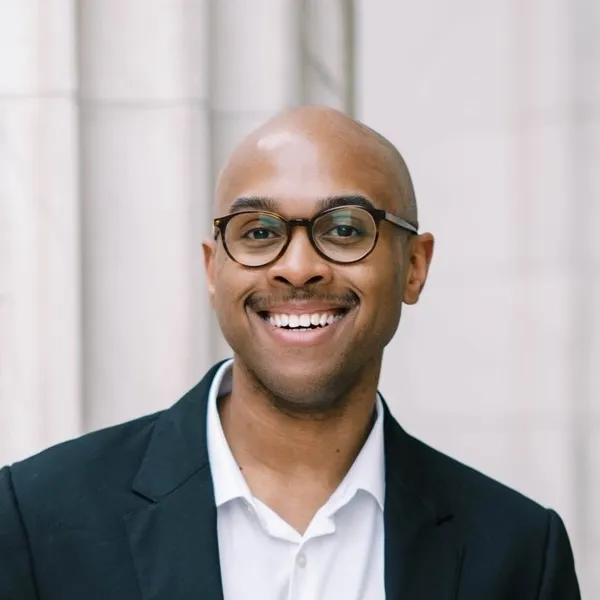
Jordan Gresham
JKG Photography
Trusted by 400+ more successful wedding photographers


Step Into the Future of Bookings
Join hundreds of wedding photographers using Icon to attract premium couples and fill their calendars with high-paying clients—months in advance.

© 2026 The Icon Agency
Ready to scale your wedding photography business?
Book a call with our team or start with the free training to see how we can help you fill your calendar with high-paying clients.